
When an ABC News correspondent asked Saudi Crown Prince Mohammed bin Salman on November 18, 2025, about the 2018 murder of Jamal Khashoggi — the Washington Post contributing columnist killed in a Saudi consulate — the exchange lasted only seconds. It was the kind of brief, direct question that democratic leaders should expect and authoritarian-minded ones tend to resent.
Donald Trump fell squarely into the second category. Shortly after the question aired, he publicly attacked ABC. Then something curious happened. Only 24 hours later, the Federal Communications Commission — under Brendan Carr, the Trump-appointed chairman who has led the agency since early 2025 — announced it was opening a review of the legal and contractual ties between national networks and their local affiliates, relationships that determine whether millions of Americans can receive network news at all.
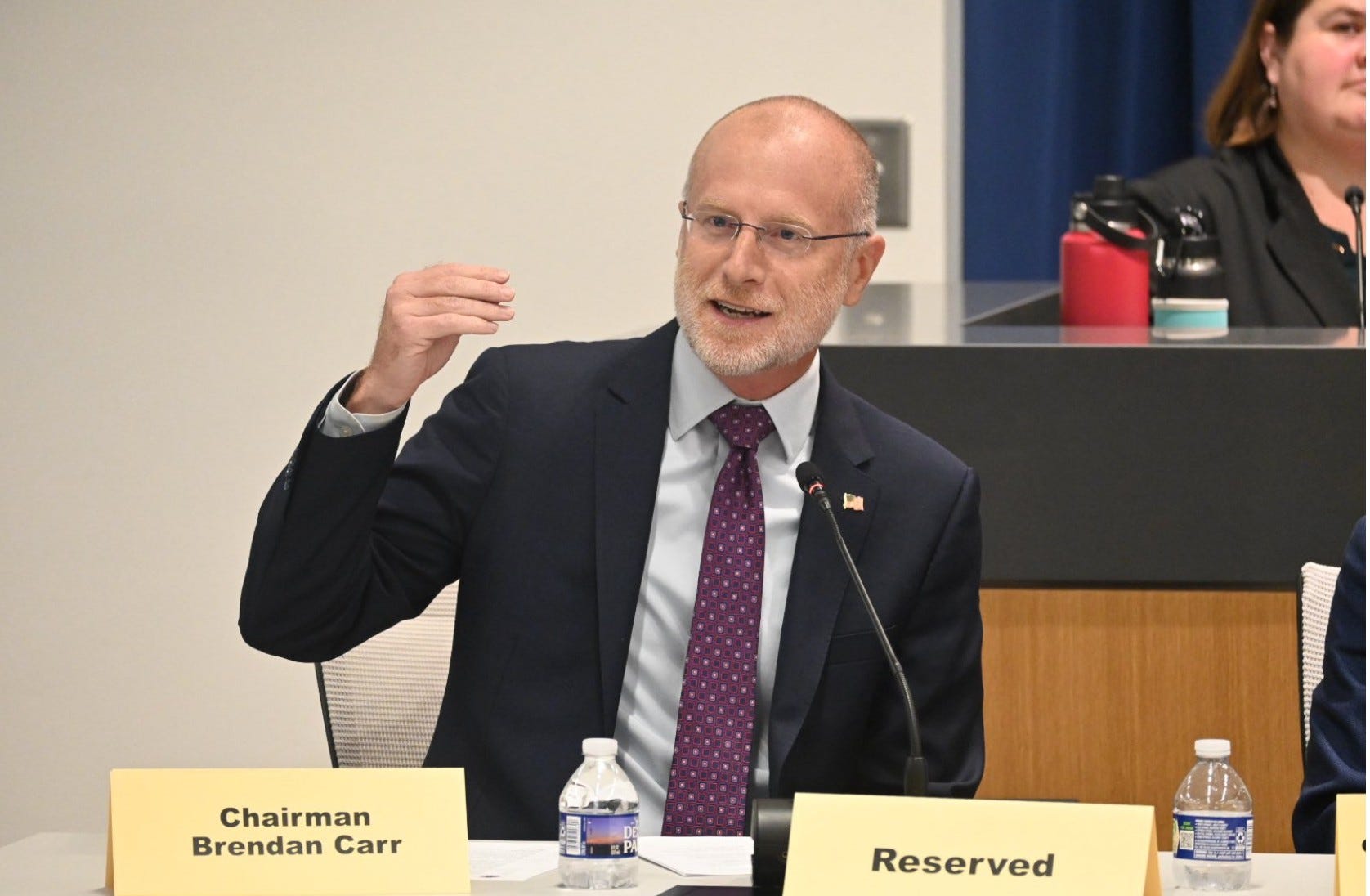
I submitted an op-ed to the New York Times at the time, arguing the sequence fit a recognizable pattern: subtle, deniable, and potentially dangerous. The Times passed on it. I'm returning to the argument now because the pattern has since repeated — twice.
In January 2026, the same Carr-led FCC reversed a long-standing rule allowing late-night and daytime talk shows to interview single candidates without triggering "equal time" obligations to every other name on the ballot. Kimmel later noted the irony: he'd interviewed candidate Donald Trump in 2016 under that same exemption without incident.
The rule change found its first target in February 2026, when CBS lawyers told Stephen Colbert his network could not broadcast a planned interview with James Talarico, the Texas state representative then running for the U.S. Senate against Republican Ken Paxton. Colbert called the legal guidance unprecedented in his two decades on the show, aired his objection anyway, and posted the interview to YouTube. Seven months later, the identical sequence played out again — this time at ABC, with the identical candidate. Kimmel taped an interview with Talarico, then told his television audience the segment would not air, citing FCC pressure on the network and its affiliates.
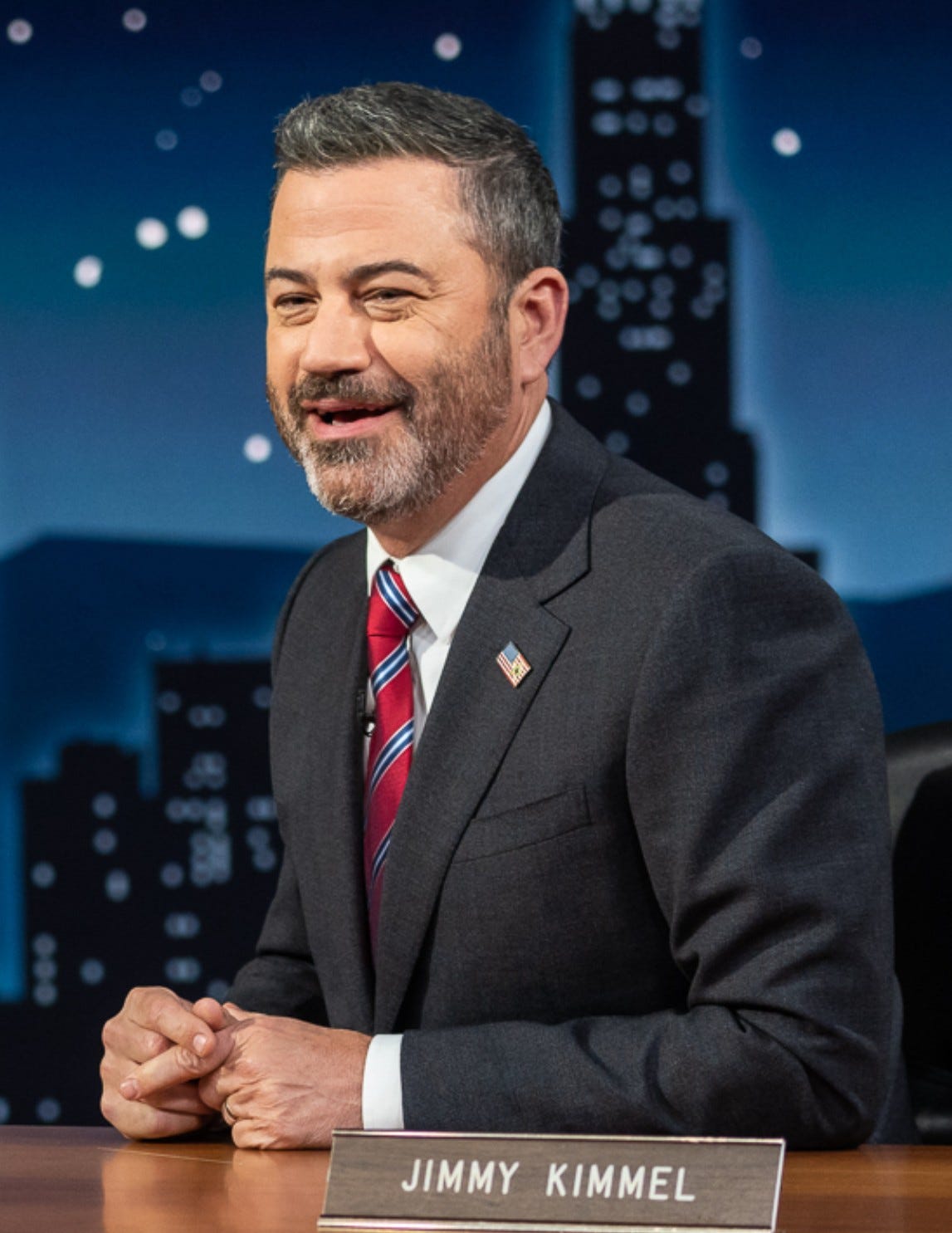
The interview went to YouTube instead, where it has now surpassed 12 million views — nearly four times Kimmel's best-ever monthly average of 3.15 million nightly viewers. The White House and Carr disputed Kimmel's account as "play-acting"; Carr maintained the equal-time statute is "about more speech, not less." Whether or not any explicit threat was issued, ABC's lawyers reached the same conclusion CBS's had seven months earlier, against the same candidate, under the same reinterpreted rule.
ABC is not a bystander here. It is the network that broadcast the Khashoggi question and drew the FCC's affiliate-contract review within a day. Ten months later, it is also the network that pulled a candidate interview from air rather than risk the FCC's reinterpreted equal-time rule. Two different regulatory levers, one network on the receiving end of both — and the same chairman overseeing both.
None of this requires believing in a coordinated conspiracy to be alarming. Two separate mechanisms have now produced the same outcome twice, at two networks: journalism that would once have aired on broadcast television migrating instead to YouTube, where the FCC has no jurisdiction at all. A regulator does not need to coordinate anything to produce a chilling effect. It only needs to make the cost of certain journalism, or certain bookings, unpredictable enough that networks route around the risk themselves.
Political pressure rarely announces itself. It operates indirectly, through signals that institutions learn to interpret. Over time, they internalize the boundaries. The danger is not simply censorship; it is self-censorship — a quiet recalibration of what questions seem worth asking, and which guests seem worth booking.
Jamal Khashoggi's murder was a stark reminder of the cost of challenging power where the press is not free. The United States is not Saudi Arabia. But a democracy's commitment to free inquiry is not guaranteed by tradition alone. It requires noticing when levers of state power are deployed — or appear to be deployed — in response to legitimate journalism, especially when each instance is small and deniable enough to dismiss on its own.
Democracies weaken not through a single dramatic rupture but through a slow accumulation of signals that narrow the space for scrutiny. Eleven months ago, I tried to warn about one such signal, in an op-ed a major newspaper decided wasn't worth running. It has since repeated at two networks, against one candidate, through two different regulatory mechanisms. I would like to be wrong about where this leads. The track record so far does not encourage that hope.